Client: Qern Pty Ltd
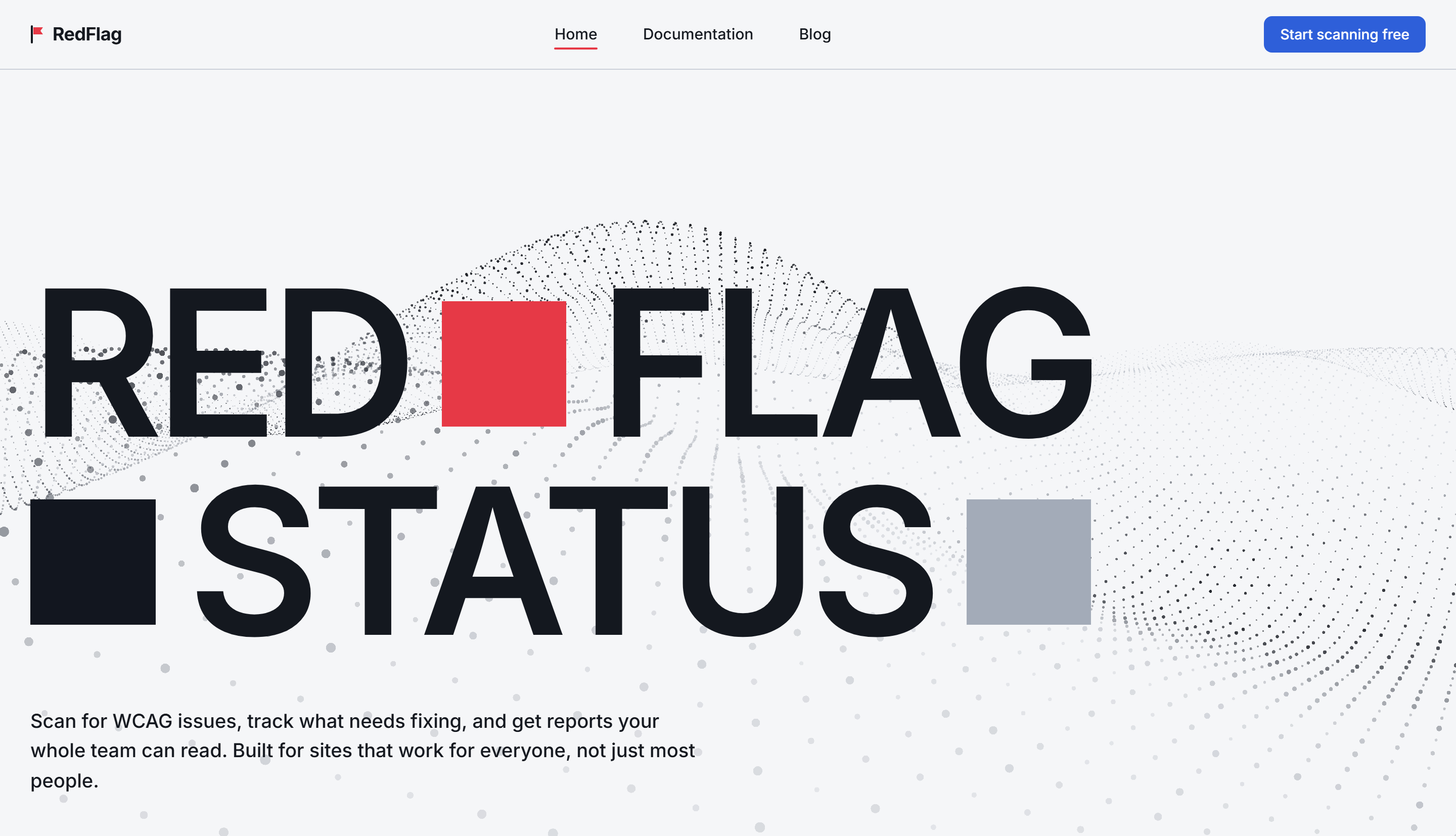
RedFlag
An accessibility testing platform that turns one-off audits into a scan, fix and prove loop.
Situation
Accessibility work in most teams arrives as a six-week audit engagement: a PDF of findings lands, some issues get fixed, and nobody can show which ones. By the next release the report is already out of date.
Problem & stakes
The problem is not detection: automated rules already catch a meaningful slice of WCAG. It is that findings sit outside the team's workflow, severity is treated as a flat issue count, and there is no defensible way to prove a fix actually landed when procurement asks for conformance evidence.
My role
Founder and product lead for RedFlag, Qern's own product. I own the product decisions, the design and the delivery, including the deliberate choices about what the tool refuses to claim.
What I led
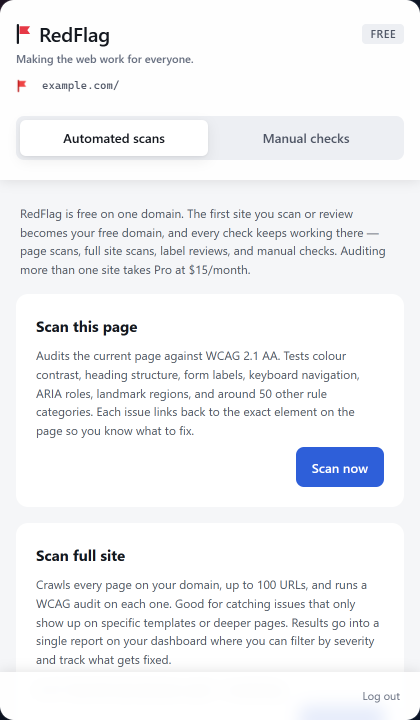
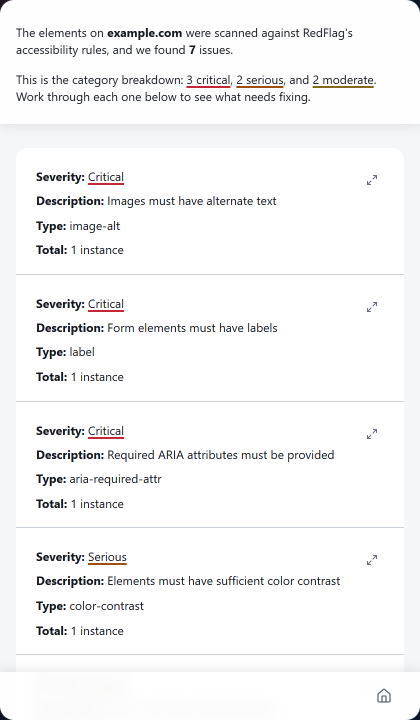
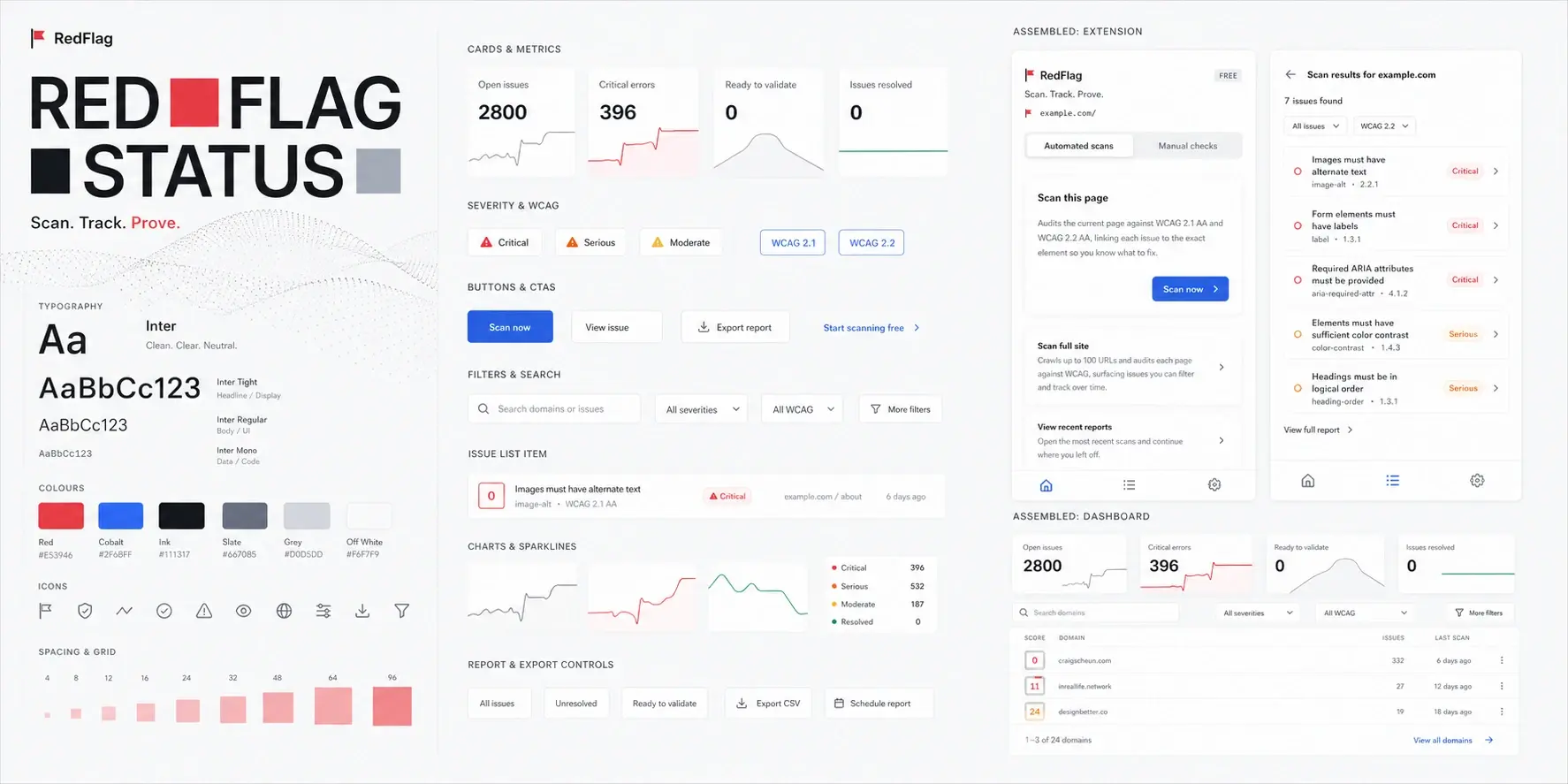
Designed the product around four entry points into an existing workflow: a Chrome extension running axe-core locally on the active page, sitemap-driven full-site crawls of up to 100 pages per run on Pro, an issue queue with explicit states (open, in progress, ready to verify, confirmed fixed) behind a weighted per-domain compliance score, and VPAT/ACR plus CSV export generated from the same live dashboard data. Every violation carries its WCAG 2.1 or 2.2 criterion, severity, selector, HTML snippet and fix guidance: the reporting is a view of the issue data, not a separate document to keep in sync.
Collaboration
Built as Qern's own product, which makes the client-facing accessibility practice and the product practice inform each other: the audit work sets the requirements, and building against them exposes where automated tooling genuinely helps and where it cannot.
Outcome
RedFlag is live and publicly available, free for a single domain with a paid Pro tier, alongside a published blog on accessibility and search. Usage, conversion and revenue figures are not published and are not claimed here.
- 100 pages
- Per full-site sitemap crawl on Pro
- WCAG 2.1 & 2.2
- Standards every violation is mapped to a criterion in
- Not yet public
- Adoption and revenue metrics, see What I learned
What I learned
The hardest product decision was where to stop claiming. Automated rules cover a real but partial slice of WCAG, so RedFlag says that plainly and recommends manual review for the rest, a weaker marketing line and a much stronger product, because a compliance score is only useful if the person relying on it knows what it does not cover.
 Qern
Qern