Client: Nedbank
Nedbank Help Centre
Intercepting contact-centre callers on personal.nedbank.co.za and routing them to self-service instead.
Situation
Retail customers who went looking for a phone number on personal.nedbank.co.za (on the Contact Us or Branch Locator pages) had no self-service alternative in view at the exact moment they were about to call the National Contact Centre (NCC), even when their task was one the website could already resolve.
Problem & stakes
There was no existing journey to baseline against; this was new ground rather than an optimisation of something already shipped. Fixing it meant intercepting an established habit (call the bank) with a self-service option, in the moment that habit was about to fire, without just adding another ignorable banner.
My role
One of three product designers, with Angus Ewing and Justin Zeeman, on a cross-functional Mastery project squad inside Nedbank, working the problem end to end through the Double Diamond process.
What I led
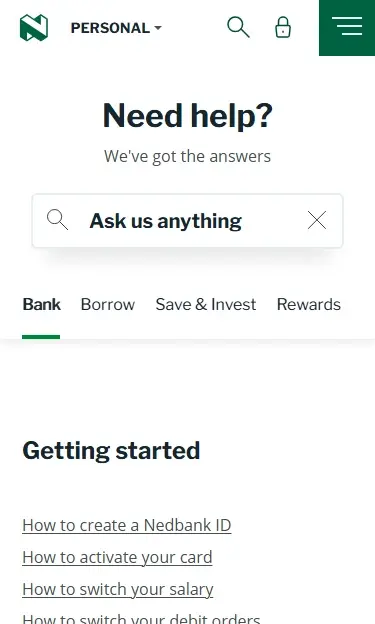
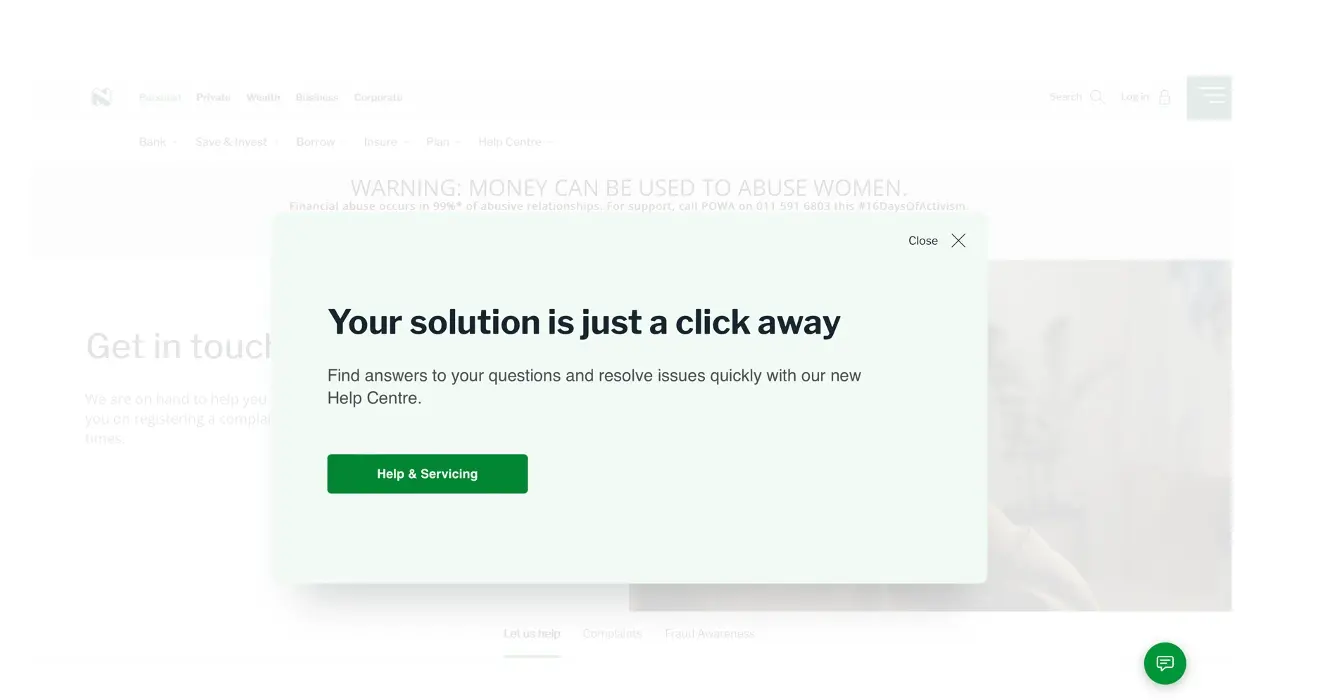
Helped define the four-stage target journey (find a service number, locate the right self-help section, find task-resolution content, self-help and exit) and the three interception points that route to it: a renamed "Help & Servicing" primary-navigation item, and pop-up intercepts on the Contact Us and Branch Locator pages. Also worked on the nudge copy itself: three variants, each built on a distinct behavioural-science principle (efficiency, loss aversion and authority), tested against each other rather than shipped on instinct.
Collaboration
Ran discovery, ideation and the nudge-copy test as a three-person squad, sharing the Discover-Define-Design-Deliver phases rather than splitting the project into separate individual workstreams; synthesised the intercept and traffic data together to decide what shipped.
Outcome
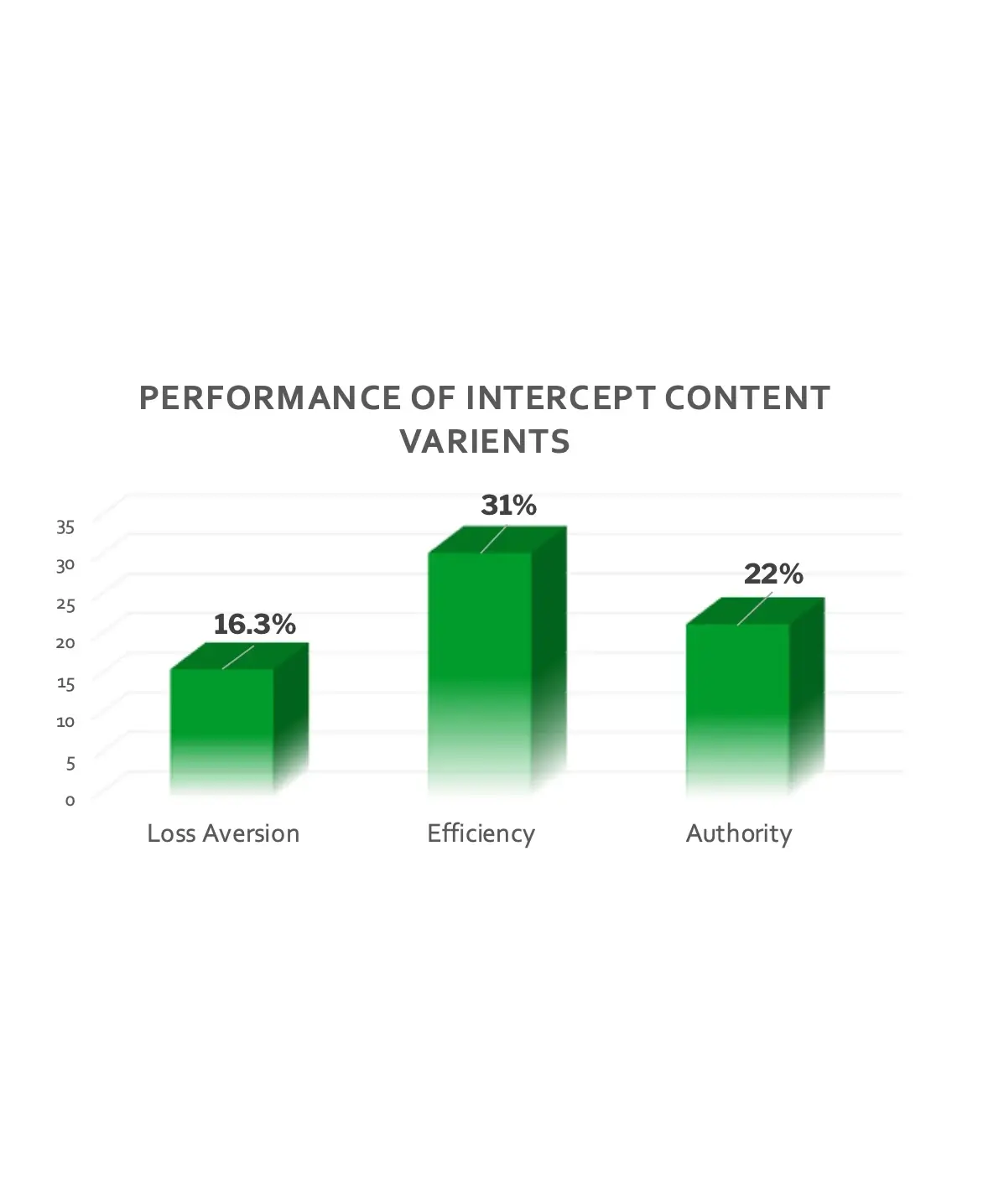
Of 13,086 visitors diverted to self-service, 8,049 did not return to the Contact Us page, read as task resolved rather than abandoned. The efficiency-framed nudge copy ("Solve Problems Faster Online") converted at 31%, well ahead of the loss-aversion (16.3%) and authority (22%) variants tested against it. Traffic to the redesigned help and servicing pages grew 74% month on month, against a 12% month-on-month decline in Contact Us visits.
- 31%
- Conversion of the efficiency-framed nudge, the best of three copy variants tested
- 8,049 / 13,086
- Diverted visitors who did not return to Contact Us (i.e. self-served)
- 74% MoM
- Growth in traffic to the redesigned help and servicing pages
What I learned
The three copy variants used the same nudge mechanism and only changed the behavioural framing, and efficiency beat loss aversion and authority by a wide margin, a reminder that a principle that works in one context needs testing, not assuming, in the next. The project also modelled an annualised cost saving (~R6m) from the reduction in NCC call volume; that figure is the squad's own hypothesis from the business case, not an audited financial result, and I would want it verified before citing it as a settled number.
 Nedbank Commercialisation Squad